The food and beverage industry in India has evolved dramatically. In 2026, you no longer need prime real estate, expensive interior design, or a large waiting staff to run a highly profitable restaurant. Welcome to the era of the Cloud Kitchen (also known as a dark kitchen or ghost kitchen).
A cloud kitchen is a delivery-only food business model. Because you save massively on rent and front-of-house staff, your profit margins can be significantly higher than a traditional dine-in restaurant. However, running a successful cloud kitchen requires incredible speed and flawless operations. Here is your step-by-step guide to starting one.
Step 1: Choose the Right Location & Licenses
Since you don't need footfall, you don't need to rent a shop on the main road. Look for a clean, hygienic commercial space in a residential hub (like an alleyway or a first-floor space) where rent is low but delivery boys can easily reach you.
Before you fry your first batch of fries, you need legal clearance. The most critical licenses include:
- FSSAI License: Mandatory for any food business in India.
- GST Registration: Required to officially bill your customers.
- Trade License & Fire NOC: From your local municipality.
Step 2: The Tech Stack (The Heart of a Cloud Kitchen)
In a traditional restaurant, a waiter manages the flow of orders. In a cloud kitchen, technology is your only waiter. If your tech fails, your kitchen collapses into chaos.
Pro Tip: A Cloud Kitchen relies on speed. Your software must sync Zomato, Swiggy, and direct orders onto one single screen.
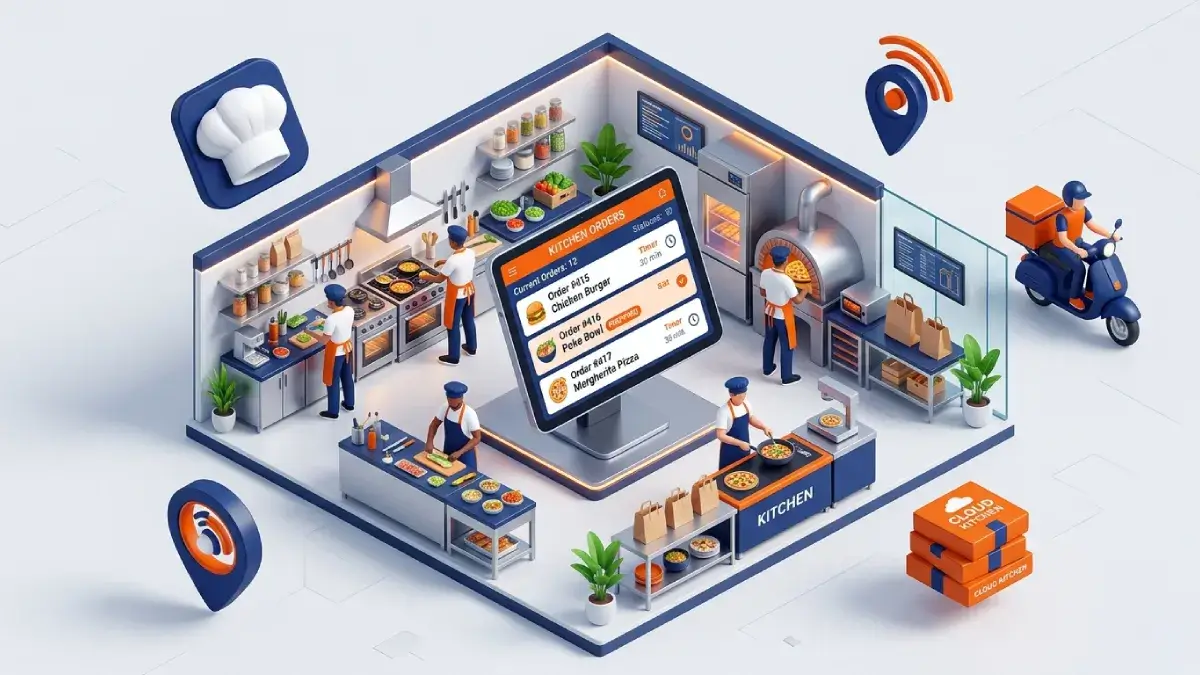
You cannot run a ghost kitchen on pen and paper. You absolutely need a modern Cloud POS System. More importantly, you need a Digital Kitchen Display System (KDS). Instead of paper KOTs getting lost or soaked in oil, every order instantly pops up on a digital screen for your chefs, complete with preparation timers.
Step 3: Standardize Your Menu & Inventory
Cloud kitchens survive on consistency. If your Biryani tastes different every time, Zomato ratings will drop, and your business will die. Furthermore, food wastage is the biggest silent killer of cloud kitchen profits.
By using Inventory Management Software, you can set up a BOM (Bill of Materials) for every dish. When an order is placed, the exact amount of raw materials is deducted from your digital stock, alerting you before you run out of crucial ingredients.
Step 4: Marketing & Direct Sales
While aggregators like Swiggy and Zomato give you initial visibility, their 25-30% commissions will eat into your profits. The ultimate goal of a successful cloud kitchen owner is to shift customers to direct ordering.
Start collecting customer data and use WhatsApp Marketing to send weekend discount codes and digital menus directly to their phones.
Ready to Launch?
Starting a cloud kitchen is exciting, but managing the daily operations is where the real battle begins. With RestoYantra's all-in-one cloud software, you get billing, inventory, KDS, and P&L reports all on a single dashboard.
Start your lifetime free trial with RestoYantra today and build the next big food brand in India!