
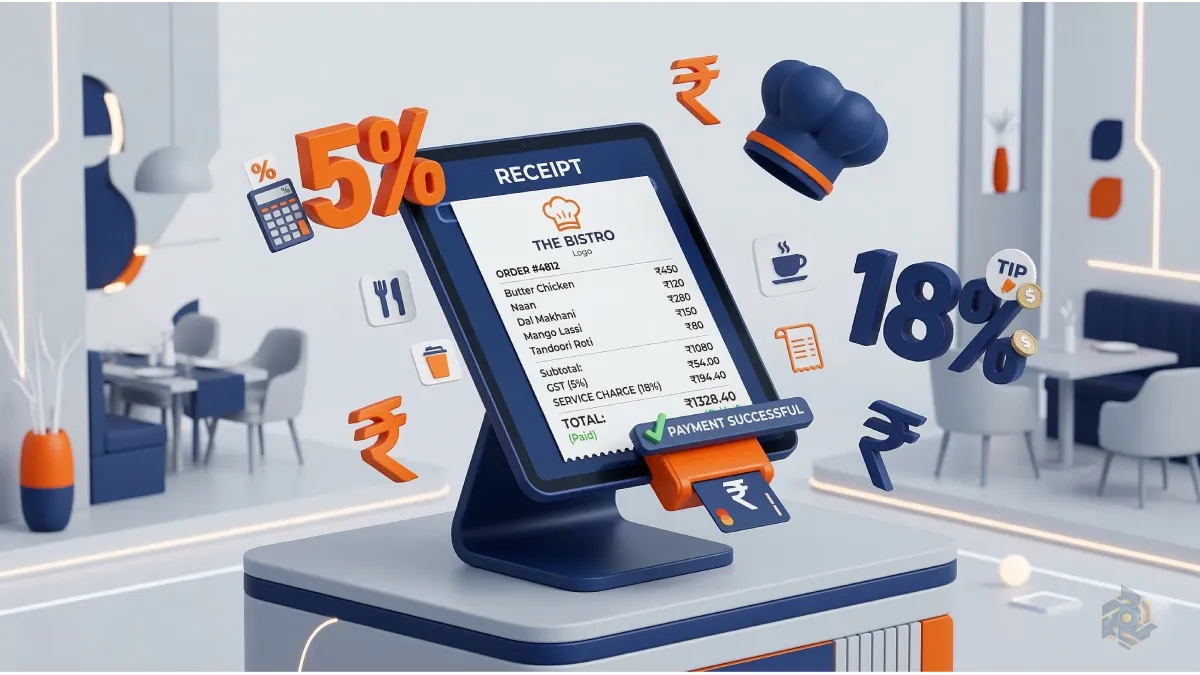
Understanding the Goods and Services Tax (GST) can be one of the most confusing parts of running a food business in India. Whether you are opening a small street-side cafe, a busy cloud kitchen, or a fine-dining restaurant, applying the correct GST rate is critical to avoid heavy penalties and maintain a healthy profit margin.
In 2026, the rules around restaurant taxation remain strict. The biggest question new owners face is: Should I charge 5% GST or 18% GST? Let’s break it down simply.
When to Charge 5% GST (The Standard Rule)
For the vast majority of food businesses in India, the applicable GST rate is 5% (2.5% CGST + 2.5% SGST). This rate applies to you if you fall into any of the following categories:
- Standalone cafes and restaurants (air-conditioned or non-air-conditioned).
- Cloud kitchens and delivery-only outlets.
- Food trucks and quick-service restaurants (QSRs).
- Restaurants located inside hotels where the daily room tariff is less than ₹7,500.
Important Catch: When you charge 5% GST, you cannot claim Input Tax Credit (ITC). This means you cannot get a refund on the GST you paid for buying raw materials, rent, or kitchen equipment.
When to Charge 18% GST (The Exception)
The higher tax bracket of 18% (9% CGST + 9% SGST) applies to a very specific set of premium food businesses. You must charge 18% GST if:
- Your restaurant is located inside a luxury hotel where the declared daily room tariff is ₹7,500 or more (even if the customer didn't stay in the room).
- You are providing outdoor catering services for events, weddings, or corporate parties.
The Benefit: Businesses charging 18% GST can claim Input Tax Credit (ITC). This allows you to offset the tax you collected against the tax you paid for raw materials and services, which is highly beneficial for large-scale operations and corporate B2B catering.
What About Zomato and Swiggy Orders?
Under Section 9(5) of the GST Act, the responsibility of collecting and depositing the 5% GST on delivery orders lies with the food delivery aggregators (like Zomato and Swiggy), not the restaurant. However, for your dine-in and direct takeaway customers, you are still required to generate a proper tax invoice.
How to Stop Worrying About GST Math
Calculating CGST, SGST, and managing different tax brackets manually on a calculator is a recipe for disaster. One wrong calculation can lead to unhappy customers or notices from the tax department.
The smartest way to handle this is by automating your checkout counter. Using a modern Restaurant Billing Software like RestoYantra, you can:
- Generate 100% accurate GST thermal bills in under 5 seconds.
- Automatically separate B2C and B2B sales for your CA.
- Export monthly GSTR and Profit & Loss reports with a single click.
Ready to Automate Your Restaurant?
Don't let tax compliance slow down your service. Start your lifetime free trial with RestoYantra today and take full control of your restaurant operations, from QR menus to smart inventory tracking!