The Silent Profit Killer in Your Restaurant: Manual Attendance and Payroll
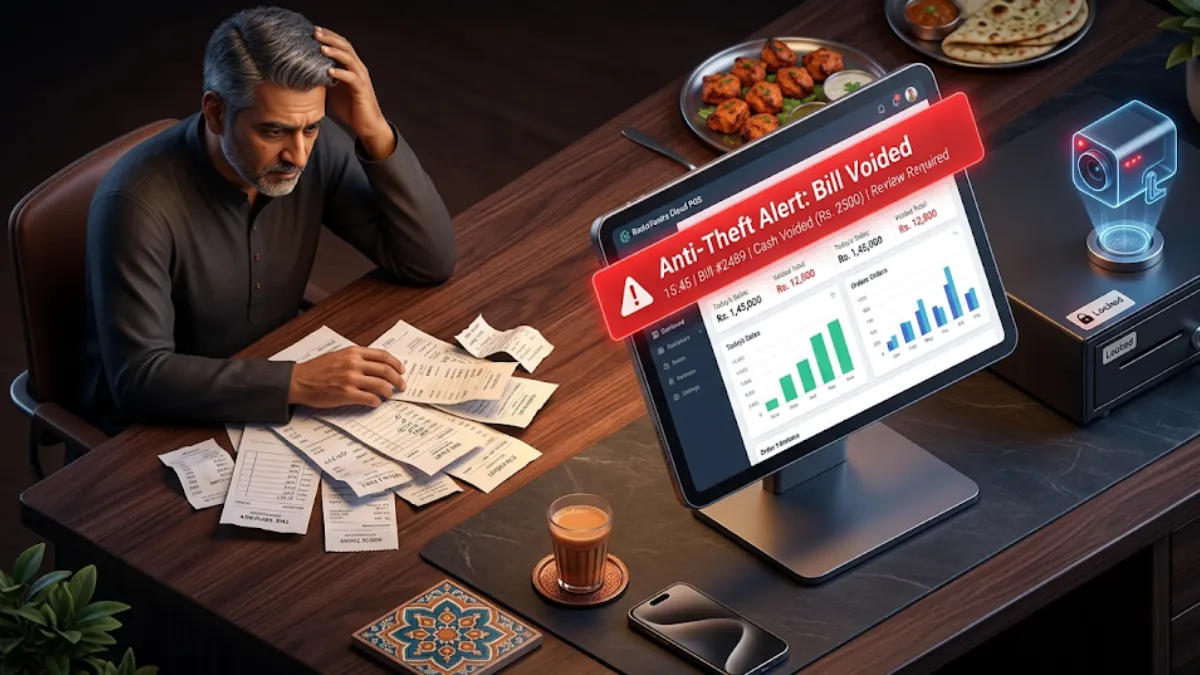
Ask any Indian restaurant owner, cafe founder, or cloud kitchen operator what their biggest headache is. They will likely mention inventory variance, rising ingredient costs, or customer acquisition. Rarely do they immediately say "payroll." But the truth is, the manual management of staff attendance and payroll is a silent profit killer, a massive time-vampire, and a ticking regulatory time bomb.
In the high-paced world of Indian hospitality, where shifts are fluid, split-shifts are common, and festival seasonal hiring is standard, relying on traditional methods—like paper registers, punch cards, or the dreaded "Master Excel Sheet"—is a strategy guaranteed to cause frustration. Restaurant managers spend hours at the end of every month cross-referencing logbooks, chasing supervisors for clarification, calculating overtime, and trying to figure out who was late, who took leave, and who actually worked on a public holiday.
Automate Your Restaurant Today!
Stop losing money to manual errors. Join RestoYantra and manage billing, KOT, and inventory seamlessly from any device.
This manual mess leads to costly errors like overpaying or underpaying staff, which directly impacts employee morale and retention. Furthermore, it leaves your business extremely vulnerable during a labor or tax audit. It is time to move beyond the spreadsheet. This guide will show you how to streamline your restaurant staff management without the chaos.
The Hidden Costs of Relying on Excel Sheets for HR
Excel is a fantastic tool for many things, but it was never designed to be an automated HR and payroll system for a business with dynamic, unpredictable staffing needs. Here is exactly why the "sheet method" is failing your Indian restaurant operations:
1. High Error Margins and Financial Leakage
Manual data entry is inherently prone to mistakes. A fat-finger error on a formula, a misread handwritten note from a shift manager, or a missed attendance entry cascades through your monthly calculations. Even a small 2% error rate in your total payroll calculation can cost your restaurant thousands of Rupees annually—money that should be going straight to your bottom line.
2. The "Buddy Punching" Problem
Paper logs and simple clock-in systems are easily manipulated. "Buddy punching," where one employee clocks in for a friend who is running late, is surprisingly common in the F&B industry. Without secure digital validation, you are literally paying for time that was not worked.
3. Real-Time Visibility is Impossible
Do you know who is currently on shift right now? Who has racked up excessive overtime this week? Who has been late five days in a row? With Excel, this data is completely backward-looking. You only discover these trends at the end of the month when it is far too late to manage or correct them.
4. Regulatory and Tax Compliance Nightmare
Managing Indian statutory requirements like Tax Deducted at Source (TDS), Employee Provident Fund (EPF), and Employee State Insurance (ESI) requires absolute precision. Keeping up with changes in the Ministry of Labour & Employment guidelines manually is incredibly difficult. A single audit failure or miscalculation can result in massive fines that easily dwarf the cost of any software solution.
How to Transition Away from the Spreadsheet Chaos
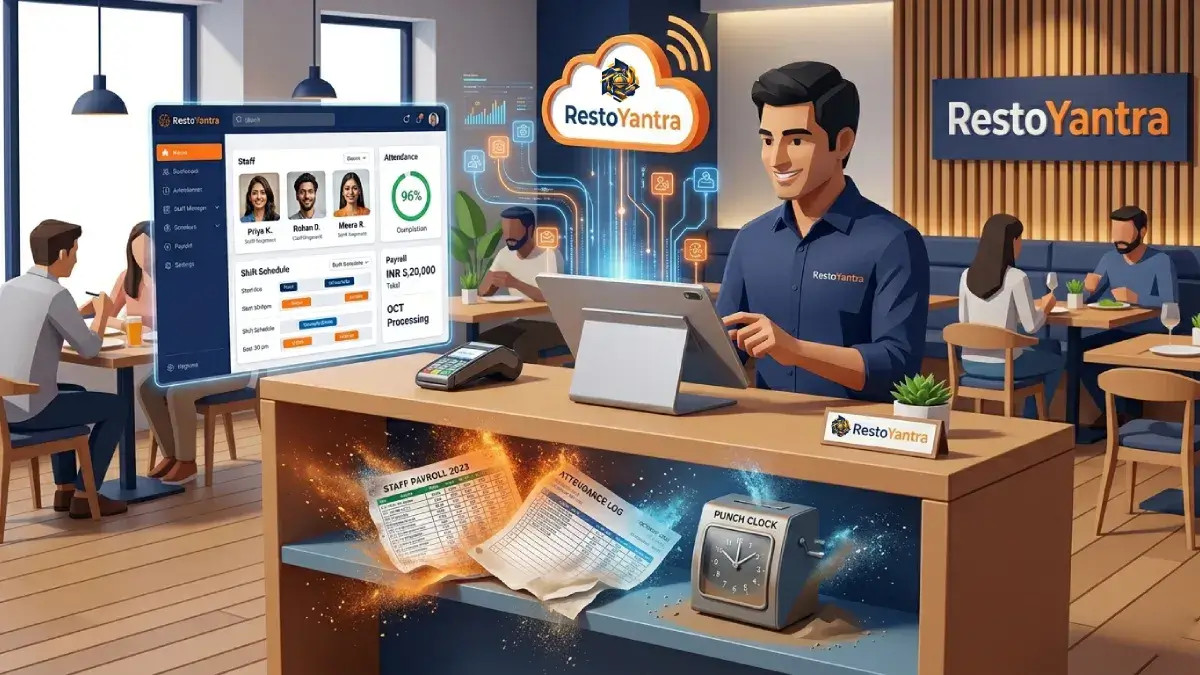
The solution is not to "try harder with Excel" or hire more admin staff. The solution is smart automation. Moving to a dedicated staff management system is essential for sustainable growth. Here is a stepwise approach to modernizing your workflow.
Step 1: Shift to Digital Attendance Capture
First, replace all paper logs with digital touchpoints. This can range from a secure app on your employees' smartphones (using geo-fencing to ensure they are physically on-site before clocking in) to sophisticated biometric devices utilizing fingerprint or facial recognition. Biometrics are highly recommended in hospitality as they completely eliminate "buddy punching." Modern cloud systems integrate these inputs directly, making attendance data immutable and instantly accessible.
Step 2: Define and Automate Payroll Rules
Stop doing mental math at the end of the month. A robust restaurant management system allows you to pre-define all your operational rules once:
- Grace Periods: Automatically handle late arrivals (e.g., deducting pay only after a 10-minute grace period).
- Overtime Tracking: Accurately calculate overtime based on daily hours (e.g., after 9 hours) or weekly limits.
- Salary Structures: Manage mixed payrolls effortlessly, distinguishing between hourly staff and fixed-salary managers.
- Leave Management: Automatically deduct unpaid leaves and calculate paid public holiday bonuses.
Once these rules are set, the software automatically applies them to the digitized attendance data, calculating the exact "Gross Pay" without human error.
Step 3: Integrate with Your POS for a Unified View
The most significant mistake restaurant owners make is keeping attendance and payroll isolated from daily operations. The ideal scenario is having this labor data flow directly into your core billing software India">restaurant billing software. Why? Because it allows you to see your labor cost as a percentage of your daily sales in real-time. If Tuesday sales are unusually low but your labor cost is high, you can make immediate scheduling adjustments for Wednesday, rather than realizing you overspent weeks later.
Pro-Tip for Cloud Kitchens: If you operate a delivery-only model, use an integrated system that can also track staff performance linked to order preparation and dispatch times. This provides a holistic view of kitchen efficiency that no standalone Excel sheet could ever offer. Check out a dedicated QR menu Ordering System">QR ordering system to further reduce front-of-house labor dependence.
Ensuring Legal Compliance for Indian Restaurants
One of the largest hidden benefits of moving away from manual tracking is absolute peace of mind regarding compliance. A premium management software should ideally automate all statutory deductions for TDS, EPF, and ESI, instantly generating the necessary reports needed by your Chartered Accountant. With strict GST compliance already a mandatory requirement for your billing and invoicing, integrating your payroll compliance makes your entire back-office operation streamlined, professional, and stress-free.
Conclusion: The Path to Professional Staff Management
Managing a successful restaurant is chaotic enough without creating unnecessary bottlenecks in the back office. Moving away from messy Excel sheets for attendance and payroll is not just about adopting new technology; it is about professionalizing your business entity. It is about respecting your hardworking employees with accurate, on-time pay, protecting yourself from regulatory risks, and reclaiming your most valuable asset as an owner: your time.
If you are finally ready to eliminate the spreadsheet headache and experience how an integrated, premium cloud solution can revolutionize your operations, it is time to upgrade to RestoYantra. Our platform offers seamless biometric attendance integration, automated complex payroll processing, and comprehensive real-time reporting—giving Indian restaurant owners back the control they need to scale their business profitably.