Opening a restaurant in India is a dream for many. You spend months perfecting the menu, negotiating the lease, and designing a stunning interior. But here is a harsh reality check: almost 60% of independent restaurants and cafes in India shut down within their first year of operation.
Why? It is rarely because the food was bad. They fail because of critical operational and financial mistakes made during the first few months. In 2026, the F&B industry is heavily driven by data and technology. If you are launching a new restaurant, QSR, or cloud kitchen, you cannot afford to run your business on guesswork.
Automate Your Restaurant Today!
Stop losing money to manual errors. Join RestoYantra and manage billing, KOT, and inventory seamlessly from any device.
To help you protect your investment and scale your profits from Day 1, we have outlined the 7 biggest mistakes new restaurant owners make—and exactly how to avoid them.
1. Managing Inventory on Paper or Excel
Many new owners think they can track their raw materials using a notebook or a basic Excel spreadsheet. This is a massive mistake. When your kitchen gets busy, chefs do not have the time to write down how much cheese or chicken they used. This leads to hidden food wastage and silent staff pilferage.
The Fix: You need an automated Bill of Materials (BOM) system. By using a modern POS like RestoYantra, you can map your recipes digitally. Every time a "Paneer Tikka" is sold at the counter, the exact grams of paneer and spices are automatically deducted from your virtual inventory, giving you a real-time, tamper-proof stock report.
2. Relying 100% on Food Delivery Aggregators
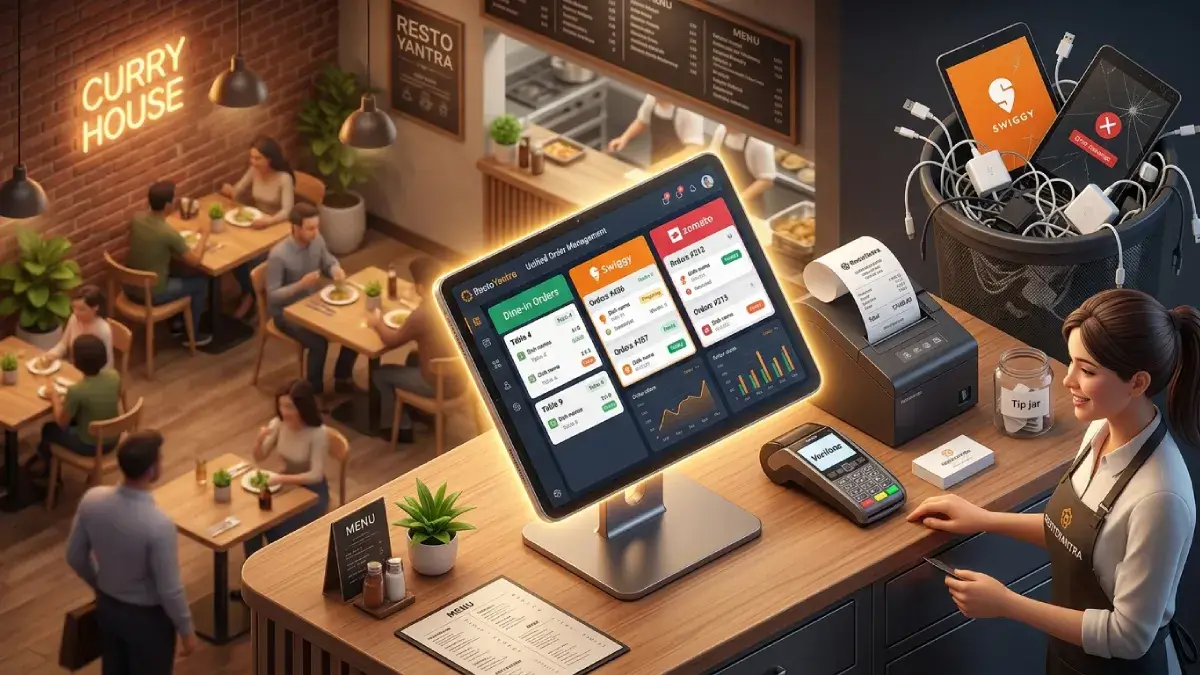
Partnering with Zomato and Swiggy is essential for initial discovery. However, relying entirely on them means you are paying a crippling 25% to 30% commission on every order. Worse, you do not get access to your customers' phone numbers, meaning you can never market to them directly.
The Fix: Start capturing customer data from your dine-in and takeaway guests immediately. Use a direct food delivery setup. RestoYantra’s integrated CRM allows you to automatically save customer numbers during billing and run 0%-commission WhatsApp marketing campaigns to drive direct weekend sales.
3. Buying Outdated Desktop Billing Machines
To save a few thousand rupees upfront, new owners often buy clunky, legacy desktop billing software. These systems trap your data on a single machine. If the hard drive crashes, your entire sales history and menu are gone. Furthermore, you cannot check your live sales if you are not physically at the restaurant.
The Fix: The future is Cloud-based. A Cloud POS system runs flawlessly on any tablet or computer. More importantly, RestoYantra’s Hybrid Edge-Computing architecture ensures that even if your internet goes down during a busy Friday night, your billing continues offline and syncs automatically the moment the Wi-Fi returns.
4. Messing Up GST and Tax Compliance
Tax compliance is not something you can figure out "later." Indian F&B taxation requires precise handling of 5% and 18% GST brackets, composite supply billing equations, and B2B vs. B2C invoicing. Even a simple operational mistake—like inadvertently disabling the GST feature in your software settings during a menu update—can result in hundreds of bills printing without missing tax details, leading to massive headaches and fines during audit season.
The Fix: Do not rely on manual math. Ensure your software handles strict composite supply GST billing automatically in the background. RestoYantra generates CA-ready GSTR reports with a single click, ensuring your tax details are never missed or miscalculated.
5. Using Paper Menus Instead of Digital Upselling
Printing expensive paper menus is a sunken cost. The moment ingredient prices inflate, your printed menu is outdated. Additionally, paper menus cannot prompt a customer to add "Extra Cheese" or a "Cold Beverage."
The Fix: Upgrade to a Smart QR Code Menu. Customers scan the code at their table, view mouth-watering high-res images of your food, and place orders directly. This premium Zomato-like experience reduces the burden on your waiters and naturally increases your Average Order Value (AOV) through automated digital upselling.
6. Poor Front-to-Back Kitchen Communication
Writing orders on a notepad and shouting them to the chef leads to wrong orders, missed customization requests (like "less spicy"), and furious customers. Delayed food is the fastest way to get a 1-star review on Google.
The Fix: Implement a centralized database order flow. When a waiter punches an order on their mobile device or the main POS, a Kitchen Order Ticket (KOT) should instantly print or appear on a digital screen in the kitchen, establishing a single source of truth for your entire staff.
7. Not Knowing Your True "Cost Per Plate"
If you don’t know exactly how much a dish costs to make, you cannot price it correctly. Many owners just look at competitor prices and copy them. But if your rent or raw material sourcing is more expensive, matching their price means you are losing money on every sale.
The Fix: Calculate your food costs diligently. A healthy food cost percentage should sit between 28% to 32%. Use a POS that tracks raw material prices and alerts you the moment a dish becomes unprofitable.
Launch Smart, Scale Fast with RestoYantra
Starting a restaurant is incredibly rewarding, but it requires the right foundation. Do not let outdated technology or manual processes be the reason your dream business struggles.
By implementing a powerful, all-in-one operating system from Day 1, you eliminate these 7 deadly mistakes entirely. RestoYantra provides you with the cloud billing, inventory control, and marketing automation you need to build a massive, profitable brand.
Start your journey the right way. Claim your free trial with RestoYantra today and turn your new restaurant into a local sensation!