Designing the Heart of Your Indian Restaurant
The kitchen is the absolute core of any restaurant, but an Indian commercial kitchen faces a unique set of culinary demands. Indian cuisine is deeply complex, requiring specialized techniques such as slow-simmering heavy gravies, high-heat tandoor roasting, and intricate dough preparation. Attempting to execute a high-volume Indian menu with standard or domestic-grade equipment is a guaranteed recipe for operational bottlenecks, inconsistent food quality, and rapid equipment burnout.
To build a profitable F&B brand in India—whether it is a premium fine-dining establishment or a high-efficiency cloud kitchen—you must invest in the right infrastructure. This comprehensive guide outlines the essential commercial kitchen equipment required to set up a robust, scalable, and compliant Indian restaurant.
Automate Your Restaurant Today!
Stop losing money to manual errors. Join RestoYantra and manage billing, KOT, and inventory seamlessly from any device.
Core Cooking Equipment: The Heat Source
The cooking line is where the magic happens. Equipment here must withstand intense, continuous heat and rigorous daily use.
1. High-BTU Commercial Gas Ranges
Indian gravies like Makhani or Rogan Josh are cooked in massive, heavy-bottomed handis or lagans. Standard burners cannot provide the necessary heat distribution. You require heavy-duty commercial gas ranges equipped with high-BTU (British Thermal Unit) burners. Look for multi-burner configurations (typically 4 or 6 burners) made from heavy cast iron to support the immense weight of commercial Indian cookware.
2. The Tandoor Oven
No Indian restaurant is complete without a tandoor. It is essential for authentic naan, roti, and tandoori kebabs. While traditional clay tandoors offer authentic flavor, modern commercial kitchens often opt for stainless-steel-clad gas tandoors. They are easier to clean, maintain a more consistent temperature, and have a longer operational lifespan while still utilizing an internal clay pot for authenticity.
3. Commercial Griddles and Dosa Tawas
If your menu features South Indian delicacies or specific street foods, a heavy-duty flat-top griddle (Tawa) is non-negotiable. A commercial Dosa Tawa needs to be thick—usually mild steel or cast iron—to retain heat evenly across a large surface area, allowing your chefs to turn out multiple crisp dosas or parathas simultaneously without cold spots.
4. Deep Fryers
For high-volume production of samosas, pakoras, and french fries, a commercial deep fryer with thermostatic controls is vital. Opt for a twin-basket floor model with a fast recovery time to ensure oil returns to the optimal temperature quickly after frozen or dense items are submerged, preventing greasy, subpar food.
Food Preparation and Processing
Prep work in an Indian kitchen is incredibly labor-intensive. Automating these processes with commercial-grade machinery directly reduces your labor costs and increases consistency.
1. Commercial Wet Grinders
Essential for South Indian restaurants to grind idli and dosa batter, and equally important for North Indian kitchens to create smooth onion, tomato, and cashew pastes. Commercial tilting wet grinders with stone rollers ensure the perfect texture without overheating the ingredients.
2. Spiral Dough Kneaders
Hand-kneading massive batches of dough for naan, paratha, or tandoori roti is inefficient. A heavy-duty spiral dough mixer can prepare 10 to 30 kilograms of uniform dough in minutes, freeing your prep staff for more delicate tasks.
3. Heavy-Duty Pulverizers and Blenders
Indian cuisine relies heavily on fresh, custom spice blends (garam masala). A commercial pulverizer allows you to grind whole spices in-house, ensuring maximum flavor and aroma. Additionally, robust commercial blenders are necessary for pureeing large quantities of spinach (for Palak Paneer) or creating smooth lassis.
Refrigeration and Storage
Proper storage is critical for minimizing wastage, maintaining food safety, and protecting your profit margins.
- Walk-In Coolers and Freezers: For medium to large restaurants, walk-in units are highly recommended for storing bulk produce, dairy, and marinated meats.
- Reach-In Refrigerators: Placed strategically near the prep stations for quick access to frequently used ingredients.
- Under-Counter Chillers: Ideal for the cooking line, allowing chefs to pull marinated kebabs or fresh paneer without leaving their station.
Hygiene, Safety, and Compliance Infrastructure
In India, kitchen hygiene and safety are heavily regulated. Before opening your doors, you must ensure your equipment setup aligns with official food safety standards. All food-contact surfaces and prep tables must be constructed from food-grade Stainless Steel (SS304) to prevent corrosion and bacterial buildup. You can review the mandatory infrastructure guidelines on the FSSAI portal.
Furthermore, a powerful commercial exhaust hood system equipped with baffle filters and fresh air makeup units is legally required to remove smoke, grease, and heat, ensuring a safe working environment for your staff.
Pro Tip: When purchasing equipment, always factor in the input tax credit. Proper documentation of your heavy machinery purchases can be filed under the Goods and Services Tax (GST), helping you optimize your initial capital expenditure.
The Digital Backbone: Empowering Your Kitchen
While high-BTU burners cook the food, it is digital infrastructure that ensures the food reaches the right table at the right time. A modern commercial kitchen cannot function efficiently on paper tickets alone.
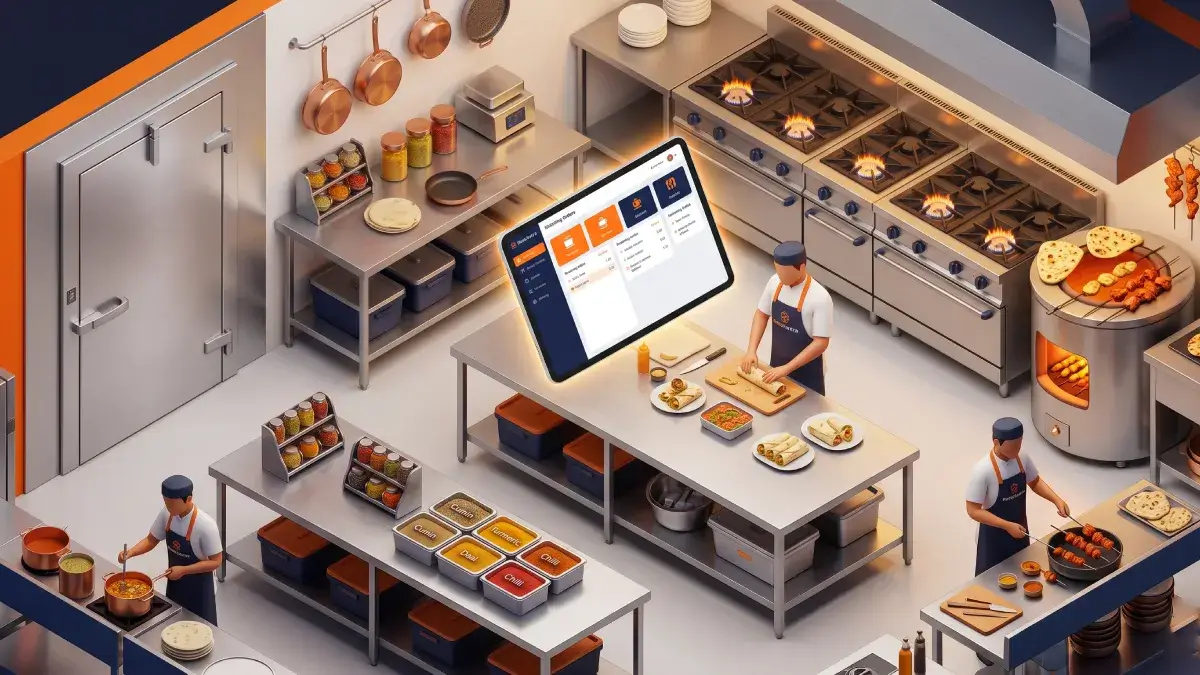
Implementing a sophisticated Kitchen Display System (KDS) is the final, most crucial piece of equipment. A KDS digitizes order flow, eliminating lost paper tickets, reducing prep time, and providing your chefs with a clear, prioritized visual queue of incoming orders from both dine-in patrons and third-party delivery apps.
Equally important is tracking the expensive raw materials stored in your new refrigeration units. Utilizing advanced inventory management">inventory management software ensures that you track yield from your wet grinders, monitor spice usage, and receive automated alerts before your essential ingredients run out.
Scale Your Operations with RestoYantra
Building a high-performance commercial kitchen requires significant capital investment; managing it shouldn't require guesswork. RestoYantra provides the premium, cloud-based operational brain your new kitchen needs.
From seamless UI/UX on our Kitchen Display Systems to granular, recipe-level inventory tracking that guards your profit margins, RestoYantra’s SaaS platform is engineered specifically for the complexities of the Indian F&B industry. Equip your kitchen with the best hardware, and empower your business with the best software. Discover how RestoYantra can streamline your operations and accelerate your growth today.