The Road to Success: Launching Your Food Truck in India
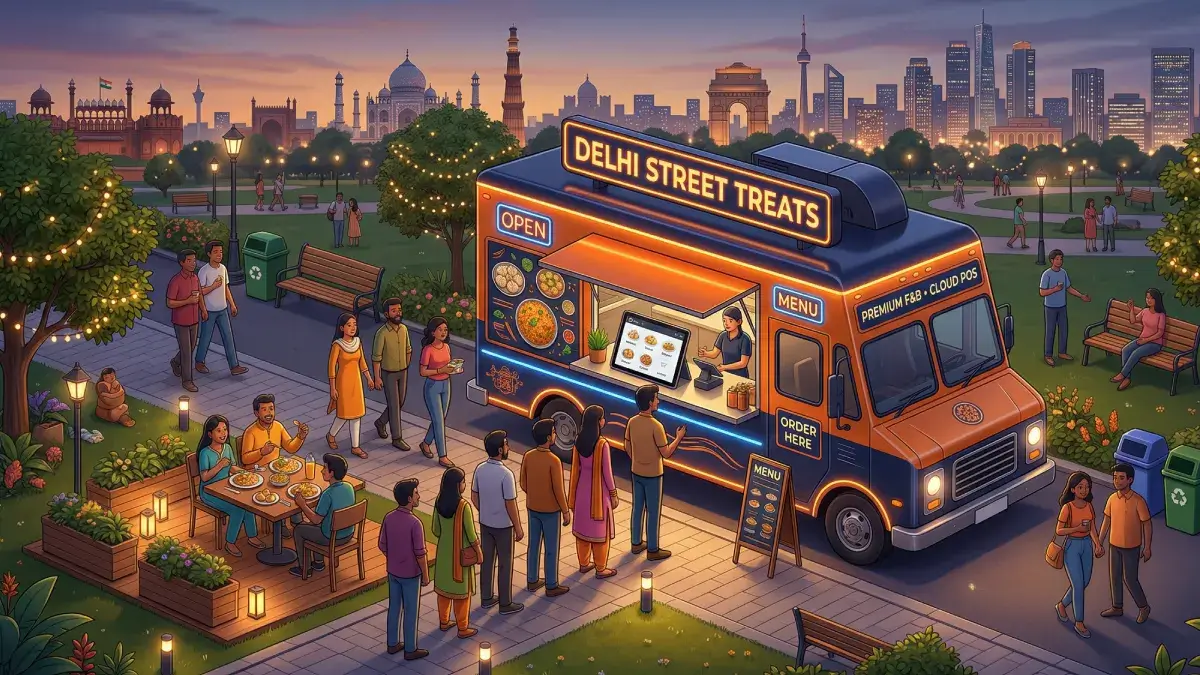
The culinary landscape in India is evolving rapidly, and the appetite for innovative, accessible dining experiences is at an all-time high. While brick-and-mortar establishments face rising rents and fixed operational costs, the **food truck business in India** has emerged as a dynamic and relatively low-risk alternative. By 2026, this mobile culinary concept is no longer just a trend; it is a vital segment of the F&B industry, offering entrepreneurs a flexible way to reach customers across diverse urban landscapes.
Unlike a static restaurant, a food truck allows you to follow the crowd—from corporate hubs during lunch hour to lively street corners at night. However, turning a mobile kitchen into a profitable venture requires meticulous planning, a strong understanding of compliance, and the right technology stack. If you are a budding restaurateur or a chef looking to bypass massive rental deposits, this comprehensive guide details how to launch a profitable food truck in India in 2026.
Automate Your Restaurant Today!
Stop losing money to manual errors. Join RestoYantra and manage billing, KOT, and inventory seamlessly from any device.
Understanding the Required Licenses and Permits (2026 Update)
The biggest roadblock for any mobile F&B business in India is often navigating the regulatory maze. Licenses are non-negotiable for operational longevity. Operating without them can lead to heavy penalties or immediate closure.
1. Food Safety and Standards Authority of India (FSSAI) License
This is mandatory for any food business operation in India. As a food truck, you will likely need a State or Central FSSAI License depending on your expected turnover and scale. It ensures your vehicle and food preparation processes meet safety standards.
2. NOC from the Fire Department
Mobile kitchens involve cooking with gas cylinders or sophisticated electrical equipment within tight spaces. You must obtain a No Objection Certificate (NOC) from the regional fire department, verifying your safety protocols.
3. Trade License from Municipal Corporation
Since a food truck is a commercial entity operating within a specific municipal area, you require a Trade License or Health Trade License from the local Municipal Corporation (e.g., BMC in Mumbai or NDMC in Delhi).
4. Shop and Establishment Act Registration
If you plan to employ anyone, you must register your food truck business under the Shop and Establishment Act of your respective state. This regulation governs working hours, wages, and employee welfare.
5. Vehicle Related Permits
Unlike a regular car, a food truck requires a specialized permit from the Regional Transport Office (RTO) for commercial use. If you plan to operate across different locations, ensure your vehicle permits are valid for all targeted areas.
6. GST Registration
While mandatory only after surpassing certain turnover thresholds, early GST registration is recommended. It streamlines your supply chain and makes you compliant for bulk orders, corporate events, and aggregators. Learn more about current restaurant slabs at the GST Portal.
Expert Tip: License procurement can be time-consuming. Start the application process for FSSAI and RTO permits as soon as you conceptualize your vehicle layout.
Analyzing the Setup Cost of a Food Truck in India (2026 Estimates)
The initial investment for a food truck is significantly lower than a traditional restaurant, but it still requires substantial capital. Your budget will primarily be split between vehicle acquisition, customization, and operational equipment.
1. The Vehicle (The Biggest Investment)
You have two choices: a new vehicle (like a large traveler or mini-truck) or a second-hand vehicle. A pre-owned truck can save capital but might incur higher maintenance costs.
- Pre-owned truck/van: ₹4,00,000 – ₹7,00,000
- New customized truck: ₹10,00,000 – ₹18,00,000+
2. Equipment and Customization
The internal layout depends on your menu. A burger truck requires a griddle and fryer, while an Indian street food truck needs burners and a large tandoor. You also need refrigeration, storage, and stainless steel surfacing.
- Equipment (grills, fryers, refrigeration): ₹2,50,000 – ₹4,00,000
- Internal Customization (fabrication, exhaust system): ₹1,50,000 – ₹3,00,000
- Aesthetics (wrapping, branding, external lighting): ₹75,000 – ₹1,50,000
3. Total Estimated Startup Cost
A realistic total cost for a well-equipped, legally compliant food truck in a metro city can range from **₹12,00,000 to ₹25,00,000**, assuming you invest in high-quality durable fabrication.
Profitability and Operational Margins
A food truck can be highly profitable if managed correctly. By cutting down on high fixed rent, your primary expenses shift to Cost of Goods Sold (COGS) and labor. In India, food trucks typically target an overall food cost margin of around 25%–30%.
With an average daily sale of ₹10,000 to ₹15,000 and effective management, a successful food truck can see net profit margins of **20% to 35%**. Achieving this requires ruthless efficiency in operations and a relentless focus on minimizing wastage.
The Critical Role of Technology: Setting Up Your Mobile POS
Operating in a tight, fast-paced environment means you cannot afford a bulky, slow, traditional cash register. Your food truck needs a nimble, dynamic, and reliable technology stack that works on-the-go.
This is where RestoYantra shines. Our premium Cloud POS software is designed for efficiency. Running on standard tablets or even mobile devices, it provides a high-end UI to manage your entire operation in the palm of your hand.
In a food truck, speed is profit. RestoYantra's Billing & POS enables rapid ordering, ensuring you never lose a customer due to a long queue. Moreover, because it is cloud-based, you can track real-time sales, inventory usage, and even manage staff attendance from any location. Our integrated inventory management">inventory management software is especially crucial for a mobile kitchen with limited storage space, helping you reduce wastage and control food costs dynamically.
Future-Proof Your Food Truck with RestoYantra
Starting a food truck in India in 2026 offers immense potential, but navigating the compliance landscape and optimizing limited resources is vital for success. Don't let operational chaos or outdated technology hold you back.
RestoYantra provides premium, tailored tools that understand the unique demands of mobile kitchens, cloud kitchens, and cafes. From sophisticated billing to powerful analytics, ensure your mobile culinary venture has the foundation it needs to scale. Focus on perfecting your menu and creating memorable street-side experiences, and let RestoYantra handle the complexities of your operations and growth.